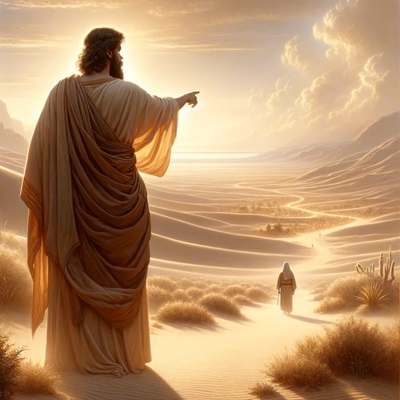
Isaiah Predicts the Coming of the Messiah
created by DALL·E3, 2023-11-16
My dear friends,
Let us reinterpret the messianic canticle of Isaiah 11:1-5 not as a mere forecast of a single, miraculous individual, but as a living metaphor for our own development along the Bodhisattva path, where each of us becomes a shoot from the stump of Jesse—a new growth rising from ancient roots.
and a branch shall grow out of his roots.
- Isaiah 11:1
This is a vivid image of spiritual renewal and transformation. In the Bodhisattva path, it symbolizes how, even when our lives feel like stumps, cut down by the suffering of samsara, a new branch of awakening can emerge. This shoot is bodhicitta, the seed of the awakened mind, growing from the deepest roots of human potential.
- Isaiah 11:2a
Here, we see the descent of what Christians call the Holy Spirit and what we may understand as the Awakening Mind, the "mind of Christ" as bodhicitta itself. This spirit is not external; it arises from within through the practices of samatha (calm abiding), vipassanā (insight), and lojong (mind training). It “rests on him”—that is, it stabilizes upon the one who has cultivated a pure vessel through ethical living and deep meditation.
the spirit of knowledge and the fear of the LORD.
His delight shall be in the fear of the LORD
- Isaiah 11:2b-3a
These are the qualities of a mature Bodhisattva. The spirit of wisdom arises from direct insight into emptiness, the lack of inherent existence in all phenomena. Understanding is born of study and reflection. Counsel reflects compassionate skillful means, and might represents the unshakable diligence that sustains us through all the hardships of the path. Knowledge is the intuitive knowing of interdependence and karma. From our standpoint, "fear of the LORD" is awe, reverence, and delighted humility before the vast mystery of ultimate truth, which transcends ego-grasping and self-clinging.
but with righteousness he shall judge the poor,...
- Isaiah 11:3b-4a
Bodhisattvas no longer abide in dualistic perception. They are not swayed by appearance, reputation, or external marks, but act from a deep knowing of karma and the nature of mind. Their “judgment” is the application of compassion and discernment, especially toward the poor in spirit—those lost in confusion, despair, or moral poverty. Righteousness here is not moralistic, but the natural expression of awakened presence, free of bias and rooted in compassion.
- Isaiah 11:4b
This reflects the Bodhisattva’s vow to serve all sentient beings without exception, especially those oppressed, invisible, or weak. Equity is seen in the Bodhisattva’s capacity to offer teachings and aid appropriate to the karmic capacities of each being, with no trace of condescension or pride.
and with the breath of his lips he shall kill the wicked.
- Isaiah 11:4c
The “rod” is the power of truth, "Dharma speech". Bodhisattvas, like Jesus, wield the sword of discriminating wisdom not to harm, but to cut through delusion. The breath of their lips, be it prayer, mantra, compassionate rebuke, or simple silence, carries transformative power.
and steadfastness(*) the belt around his loins.
- Isaiah 11:5
These garments are not external vestments, but the inner disciplines (paramitas) of śīla (ethical discipline) and virya (joyful perseverance). Bodhisattvas gird themselves daily with the resolve to act with integrity, and to adhere steadfastly to their vows, no matter the cost or circumstance.
In this Advent season, my dear friends, let us not await a Messiah to come from without. Let us realize that Isaiah’s vision is an invitation to become the one upon whom the Spirit rests. To let the shoot grow within us. To train in the sevenfold spirit—wisdom, understanding, counsel, might, knowledge, awe, and delight in the sacred—and to awaken bodhicitta so fully that we, too, can bring justice, healing, and peace to this weary world.
(*) I have translated the Hebrew emunah here as "steadfastness" instead of the more commonly used "faithfulness", which is subject to misinterpretation.