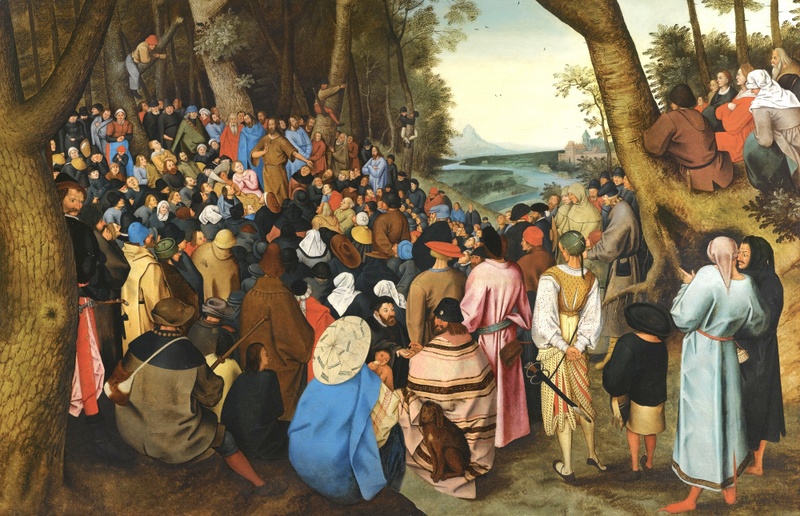
Saint John the Baptist Preaching to the Masses in the Wilderness
Pieter Bruegel, 1601
My dear friends,
As we enter the second Sunday of Advent, we hear the voice of one crying out in the wilderness. John the Baptist, clothed in camel's hair and nourished by the wilderness, calls us to the essential work of repentance. This is not merely remorse for wrongdoing but a turning (metanoia) toward the divine presence that is near. As both Christians and Bodhisattvas-in-training, we understand that this path of transformation involves purification through both the cooling waters of humility and the refining fire of wisdom.
"Repent, for the kingdom of heaven has come near."
- Matthew 3:1-2
The wilderness is the place of spiritual stripping, away from distraction, away from habit, where only truth can stand. John proclaims a message that is radical in both simplicity and depth: turn back to God, for the realm of heaven draws close. In our own practice, whether through prayer, meditation, or compassionate action, repentance means making space in our hearts for bodhicitta, the mind of awakening that yearns not only for our liberation, but for the liberation of all beings.
"The voice of one crying out in the wilderness:
'Prepare the way of the Lord, make his paths straight.'"
Now John wore clothing of camel's hair with a leather belt around his waist
and his food was locusts and wild honey.
- Matthew 3:3-4
John stands in the lineage of the great prophets—Isaiah in word, and Elijah in lifestyle. His simplicity is a testimony against the grasping mind. Like a wandering yogi or mendicant monk, he lives free from entanglement, fully consecrated to the task of awakening others. His voice cries not for personal gain but to awaken hearts dulled by comfort and convention. This prophetic vocation calls us also to renounce what is false in us, and to live for the path that leads all beings to freedom.
and all the region along the Jordan,
and they were baptized by him in the river Jordan, confessing their sins.
- Matthew 3:5-6
- The Seven-Limb Practice
As each pilgrim stepped into the river for baptism (literally, "washing"), they were met not with condemnation, but with a chance to begin again. Just as the waters of the Jordan carried away the dirt from their feet and bodies, so too does sincere regret carry away the stains of past deluded actions from the mindstream. This act of purification carries a vow to walk a new path, unburdened, with footprints guided by wisdom and compassion.
"You brood of vipers! Who warned you to flee from the wrath to come?
Bear fruit worthy of repentance.
- Matthew 3:7-8
The prophetic voice must sometimes burn with fire. John challenges superficial piety and inherited status. The fruit of repentance is not words but action: justice, compassion, renunciation. We are called, not to display holiness, but to embody the transformation that makes holiness real.
for I tell you, God is able from these stones to raise up children to Abraham.
- Matthew 3:9
No one is exempt from the inner work of transformation. Lineage is a blessing, not a substitute for virtue. The Dharma is living, and lives wherever bodhicitta arises. Stones can become disciples, and outcasts become saints. We must not rest on our laurels, nor presume upon grace, but awaken anew each day, returning again and again to the holy labor of love.
every tree therefore that does not bear good fruit
is cut down and thrown into the fire.
- Matthew 3:10
The ax at the root is not cruelty but clarity. Falsehoods must be severed, not for punishment but for healing. On the Bodhisattva path, we seek to cut the root of our own ignorance, before presuming to correct it in others. Fire here is the fire of wisdom, which consumes delusion and ripens the fruit of insight. Let our lives be fruitful in compassion, or let the fire make space for new growth.
but one who is more powerful than I is coming after me;
I am not worthy to carry his sandals.
He will baptize you with the Holy Spirit and fire.
- Matthew 3:11
Water washes the outer garment; fire transforms the inner being. Like the Holy Spirit, bodhicitta is fire from above, a force that enlightens, enlivens, and consumes the dross of self-clinging. The one John announces brings not only purification but illumination. This baptism of fire is not safe, but it is sacred. It is the beginning of true life in Christ, and the path of fearless compassion in the world.
and will gather his wheat into the granary;
but the chaff he will burn with unquenchable fire."
- Matthew 3:12
The winnowing fork is the discernment of Christ: the wisdom that separates wheat from chaff, not to condemn, but to preserve what is true. The fire that follows is not wrath but radiant love, burning away all that hinders liberation. This is Advent: the coming of the One who brings both mercy and truth. Let us welcome Him with hearts made clean and aflame with love for all beings.
May this Advent season awaken in us the courage to repent, the humility to confess, the joy of being washed in living water, and the fearless heart that accepts the baptism of fire. In the wilderness of this world, may we become voices crying out for compassion, for justice, for the coming of the kingdom of heaven in every heart.