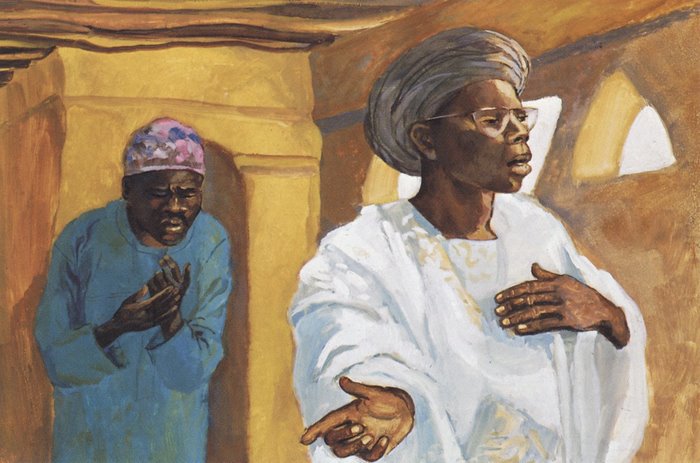
The Pharisee and the Publican
JESUS MAFA, 1973
I will regard myself as the lowest among all,
And from the depths of my heart
Cherish others as supreme. The best patience is to uphold humility.
My dear friends,
In a world where the self is exalted and individual merit is loudly proclaimed, the sacred path of humility often goes unnoticed. And yet, both the Lord Jesus and the great Bodhisattvas point us gently toward this narrow way, wherein true greatness lies in lowliness of heart. Humility is not the belittling of the self, but the forgetting of the self in love and reverence for others. It is the fruit of wisdom and the root of compassion. Let us reflect deeply together.
to some who trusted in themselves
that they were righteous
and regarded others with contempt:
"Two men went up to the temple to pray,
one a Pharisee and the other a tax collector".
- Luke18:9-10
Jesus speaks this parable directly to those of us who unconsciously place our trust in our own virtue. Just as the Pharisee elevates himself by judging the tax collector, we too may view others through the lens of superiority. This is the blindness of pride, which severs the natural bond of compassion. The mind of Christ, which is bodhicitta, sees not ranks among people but the shared burden of suffering and the universal need for mercy.
I fast twice a week; I give a tenth of all my income.'"
- Luke18:11-12
Observe how the Pharisee's prayer, though addressed to God, revolves entirely around himself. He lists his deeds as credentials of worthiness, but in doing so, he reveals his estrangement from the very heart of prayer. Humility does not boast, nor does it weigh its merits against others. As the Buddha taught, attachment to virtue can bind us just as tightly as attachment to pleasure. The true practitioner lets go of self-image and seeks the welfare of all beings.
but was beating his breast and saying, 'God, be merciful to me, a sinner!'"
- Luke18:13
In contrast, the tax collector stands afar, his heart broken open in the presence of divine light. He does not compare; he confesses. He does not proclaim; he pleads. In him we see the essence of the path: naked awareness of one's faults, and complete reliance on grace. In lojong practice, we take the blame and give the victory to others. This is not defeatism, but the gateway to awakening love.
for all who exalt themselves will be humbled, but all who humble themselves will be exalted."
- Luke18:14
To be justified is to be seen truly by God. The one who descends into the humility of repentance is raised into the light of truth. As Jesus teaches and as the Bodhisattvas embody, true exaltation arises through liberation from ego, self-clinging, and pride. This is the exaltation of love, wisdom, and the quiet strength that serves all beings without seeking reward.
Let us therefore walk the path of humility not with fear, but with joy. Let us cultivate the mind that bows low, not out of self-rejection, but out of reverence for the sacred worth of others. In this posture of the heart, we meet Christ in the tax collector, and we awaken bodhicitta in ourselves. And so, we descend to ascend, we surrender to become free, and we are made whole in our willingness to be small.