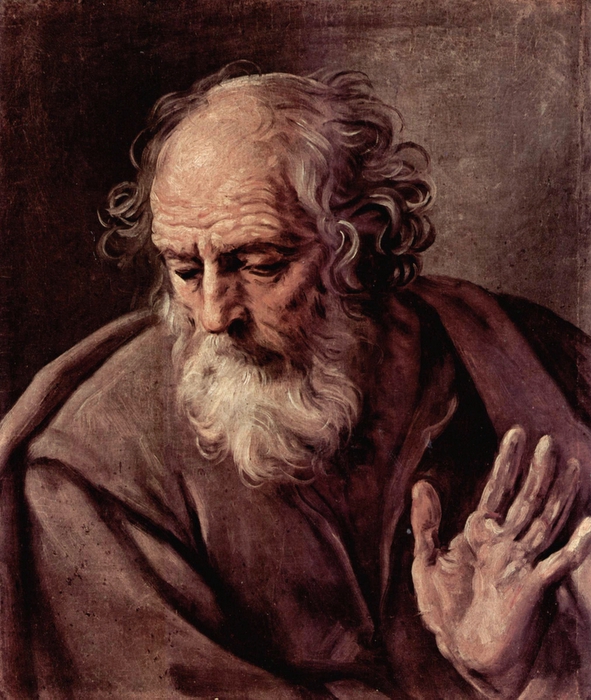
Joseph
Guido Reni, 1641
My dear friends,
In this final Sunday of Advent, we are invited to turn our hearts toward the mystery of incarnation through the eyes of Joseph, the silent guardian of divine love made flesh. As followers of the Bodhisattva path, we reflect on how this narrative invites us into deeper compassion, greater surrender, and profound trust in the activity of bodhicitta, the awakening mind that labors to bring all beings to the realization of wisdom and love.
When his mother Mary had been engaged to Joseph,
but before they lived together,
she was found to be with child from the Holy Spirit.
Her husband Joseph, being a righteous man
and unwilling to expose her to public disgrace,
planned to dismiss her quietly.
- Matthew 1:18-19
Joseph's quiet integrity mirrors the first training of the Bodhisattva: ethical discipline rooted not in the fear of judgment but in compassionate discernment. Faced with a situation that could provoke anger, shame, or self-righteousness, he chooses the path of non-harming. Here we see a holy reflection of the precept to protect others from suffering, even at the cost of misunderstanding. Joseph is like the beginner Bodhisattva who, though not yet possessing full wisdom, responds from the heart of non-grasping and restraint, preparing the ground for deeper realization.
"Joseph, son of David, do not be afraid to take Mary as your wife,
for the child conceived in her is from the Holy Spirit.
She will bear a son, and you are to name him Jesus, for he will save his people from their sins."
- Matthew 1:20-21
In the stillness of sleep, the veil of conventional thinking is parted, and Joseph hears the voice of the divine. This recalls the second training — meditative concentration — where stillness of mind gives rise to clarity. The angel's message dispels fear, for fear arises from self-centered concern. But Joseph is summoned to let go of his own plans and to align with a higher calling. Bodhisattvas, too, receive dreams and visions, insights born from inner silence which direct them to act for the liberation of others, even when it defies worldly logic.
"Look, the virgin shall conceive and bear a son,
and they shall name him Emmanuel," which means, "God is with us."
- Matthew 1:22-23
"God is with us" — this is the heart of bodhicitta: the realization that ultimate reality is not distant or separate, but present within and among us. The prophecy fulfilled is not merely historical; it is timeless. The awakened mind of Christ, like the mind of a Bodhisattva, comes to dwell within our suffering world, not to escape it. Just as Avalokiteśvara embodies compassion by appearing wherever beings call out, so does Emmanuel embody the intimate presence of love that responds to the cries of the world.
he took her as his wife, but had no marital relations with her
until she had borne a son; and he named him Jesus.
- Matthew 1:24-25
Joseph acts with unwavering obedience to the vision he received. This is the third training: the wisdom that penetrates appearance and acts without hesitation. He does not cling to convention or reputation, nor does he demand understanding. In taking Mary and naming the child Jesus, Joseph steps into his role as protector of the incarnation. Likewise, the Bodhisattva, upon realizing emptiness and interdependence, responds with fearless compassion, taking responsibility for the welfare of others with the humility of one who serves the divine in all beings.
As Advent draws to its close (which is a new opening), may we, like Joseph, prepare a dwelling place for bodhicitta in our hearts. Let us listen in silence, surrender our fears, and take up our roles in the great unfolding of compassion. The Christ-child and the Bodhisattva arise in the same sacred space: the heart purified by love and made vast by wisdom. Let us awaken together, for truly, God is with us.